Which Peec AI Alternative Is Right for Your Team?
Peec AI too limited or too pricey? Compare 14 alternatives from $20 upward: pricing, engines, prompt quotas and the trade-offs behind each tier.

Managing Director at Alexandrya.AI
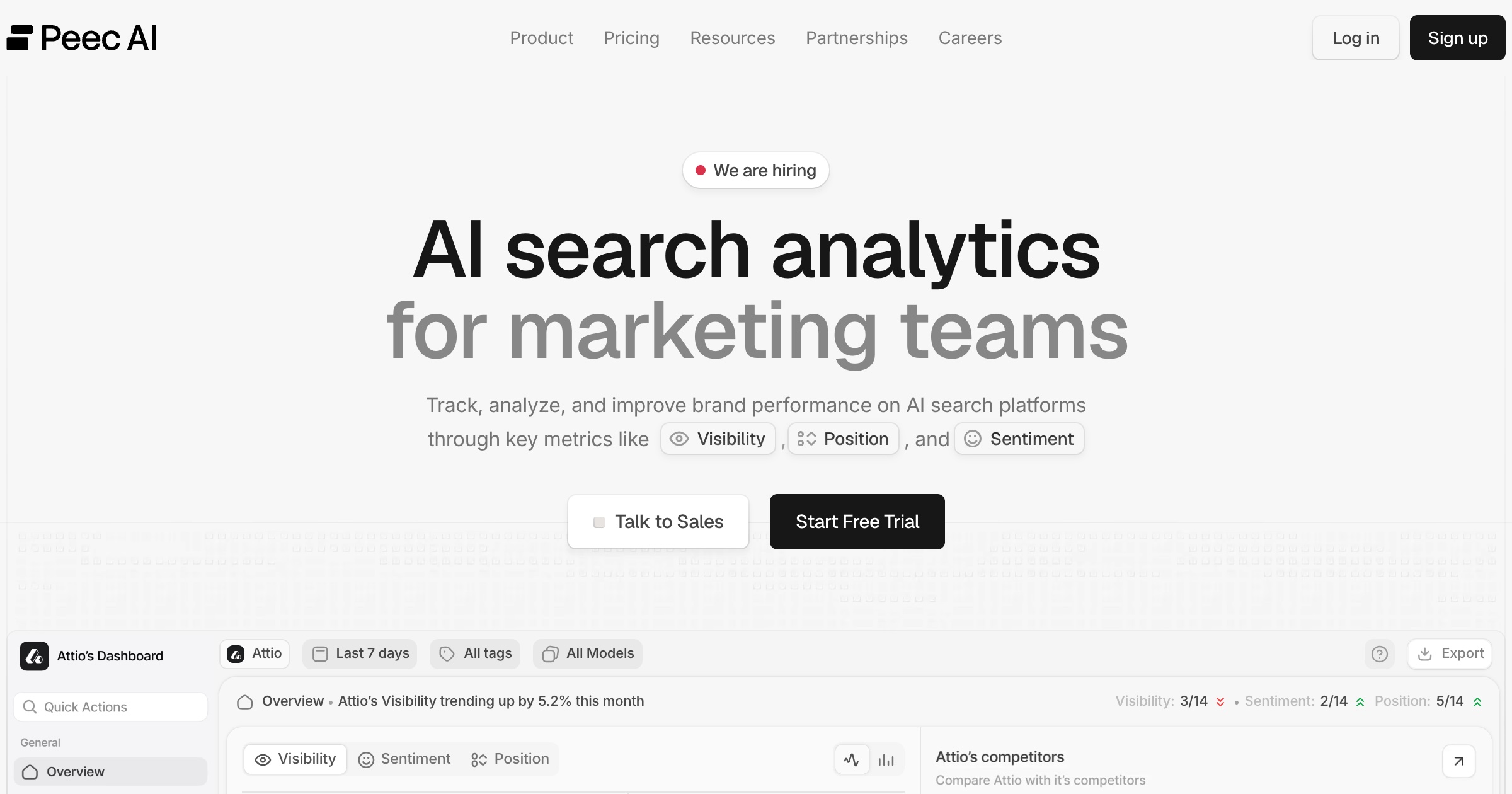
Peec AI is a strong, focused AI visibility tracker: daily monitoring, clean source and sentiment data, unlimited users on every plan. Teams rarely leave because of quality. They leave because of fit. On the self-serve plans you activate three of six models, extra models cost €30 to €140 per month each, and prompt quotas are fixed. This comparison covers 14 alternatives from $20 to four figures per month.
TL;DR
- Alexandrya.AI for teams that want prioritized actions instead of another dashboard. €79 per month, 50 prompts, unlimited users, seven days free in the full version.
- Otterly.AI for solo SEOs. $29 per month with four engines included, but budget for add-ons if you need Claude.
- SE Visible for prompt volume per dollar. $99 per month for 200 prompts across five engines.
- Profound for enterprises with compliance requirements. Up to nine answer engines, SSO and SOC 2, pricing on request.
- HubSpot AEO as the cheapest credible entry point at €49 per month, if you already live in HubSpot.
Disclosure: Alexandrya.AI is our own product. We rate it against the same criteria as everything else here and name its limits. All figures as of September 2026.
Why does this comparison exist?
Because we used Peec AI as power users for roughly six months in live client projects before we built our own platform. Three things kept coming up.
- We could see that we were missing from certain answers, but not which content, sources or listings were responsible.
- After every report, the same question hung in the room: what do we actually do with this?
- There was no structure forcing us toward the highest-leverage fixes rather than the twentieth chart nobody opens.
Those three gaps are the reason Alexandrya.AI exists. That belongs up front, not in the small print.
What is Peec AI and what does it cost?
Peec AI is a Berlin-based AI search analytics platform, founded in 2025, that measures how often and how a brand appears in AI assistant answers. It lists more than 3,000 brands and agencies as customers.
Brand plans, billed monthly:
| Plan | Price | Prompts | Active models | Projects | Countries |
|---|---|---|---|---|---|
| Starter | €85 | 50 | 3 of 6 | 1 | 1 |
| Pro | €205 | 150 | 3 of 6 | 2 | 3 |
| Advanced | €425 | 350 | 3 of 6 | 5 | 3 |
| Enterprise | Custom | Custom | All, up to 13 | Unlimited | Unlimited |
- The six self-serve models are ChatGPT, Google AI Mode, Google AI Overviews, Microsoft Copilot, Gemini and Naver AI.
- Enterprise only, delivered via API: Claude Sonnet 4, GPT-5 Search, Grok, DeepSeek, Qwen, Mistral, Meta Spark and Perplexity.
- Separate agency price list billed in credits: Essential €205 for 10,000 credits, Growth €425 for 25,000, Scale €675 for 65,000, Comprehensive custom.
What does the "3 of 6" cap really cost?
Extra models cost €30 per month on Starter, €70 on Pro and €140 on Advanced, each, for one additional model.
The billing logic explains why. Peec charges in "AI answers", calculated as prompts times active models times tracking frequency. Every model you switch on multiplies your query volume, so the cap is not arbitrary, it is the price lever.
Run the math on Pro: five active engines instead of three cost €205 + (2 × €70) = €345 per month, 68% above list. On Advanced, five engines cost €425 + (2 × €140) = €705 per month, 66% above list. And no amount of add-on spend gets you Claude on a self-serve plan, because it is not in the add-on list at all.
That is the single most useful number to carry into any comparison: not the list price, but the price of the engine coverage you actually need.
How should you evaluate a Peec AI alternative?
Six criteria, in this order: engine coverage, source analysis, sentiment and benchmarking, data freshness, the path from insight to action, and only then price. Teams that start with price often buy a tool that does not measure the platforms they care about.
Which AI platforms does it actually track at once?
Check how many models can run simultaneously, not how many are listed. The gap between "six models available" and "three models active" is the gap between the list price and your invoice. For the US market, ChatGPT, Google AI Overviews, Google AI Mode and Perplexity are the baseline. Copilot matters in B2B environments running Microsoft 365. Claude matters for technical and developer audiences, and it is the single most common paywall in this category.
How deep is the source and citation analysis?
Source analysis is what turns a visibility score into work you can assign. According to McKinsey, more than 65% of the content in AI answers comes from third-party sources such as reviews, trade articles or forums, while brand websites often contribute only 5 to 10%. A tool that shows your score but not the cited domains and URLs leaves you blind to the lever that accounts for most of the answer. What makes a source citable is covered in What makes a brand citable in AI responses?
Does it show sentiment and competitors, or just a number?
Visibility without context is noise. What matters is share of voice against your real competitive set, and whether the AI speaks about you positively, neutrally or critically. Check how many competitors each tier allows and whether sentiment is evidenced or just scored.
How fresh and how honest is the measurement?
Daily tracking is the standard, weekly rarely suffices, because AI answers fluctuate enough that infrequent sampling manufactures trends that are not there. Also ask whether prompts are yours or drawn from a shared index, and whether country and language are set separately.
Who turns the data into action?
Decide this before you buy. Some tools ship reports, some ship prioritized task lists, some generate content. The smaller your team, the more the action layer is worth, and the more a pure analytics tool costs you in hours that never show up on the invoice.
What will it actually cost at your configuration?
Compare cost per tracked prompt including every add-on, not list prices. Three hidden drivers: extra models, extra seats, and extra domains or projects. Peec AI and Otterly.AI offer unlimited users, while Scrunch, Semrush and Writesonic limit or charge for seats.
The 14 Peec AI alternatives at a glance
All prices are published entry prices as of September 2026, based on monthly payment and excluding tax unless marked otherwise. Euro and dollar amounts are not converted. Prices change quickly in this category, so check them on the vendor's page before you decide.
| Tool | Entry price | Engines at entry | Prompts at entry | Best for |
|---|---|---|---|---|
| 1. Alexandrya.AI | 7-day free trial of the full version, then €79/mo | 3 of 5 selectable, plus Claude | 50 | Teams turning visibility data into prioritized tasks |
| 2. Geoptie | $49/mo | Any 4 of 7 | 15 | Small teams wanting four engines cheaply |
| 3. Profound | Free trial, Enterprise on request | 1 in trial (ChatGPT), up to 9 on Enterprise | 10 in trial, run once | Enterprises with compliance requirements |
| 4. Scrunch AI | approx. $300/mo | not disclosed | 350 own plus 1,000 industry prompts | Technical SEO teams tracking AI crawlers |
| 5. Otterly.AI | $29/mo | 4 included (ChatGPT, AI Overviews, Perplexity, Copilot), 3 paid add-ons | 15 | Solo SEOs on tight budgets |
| 6. Rankscale | $20 Essentials, $99 Pro | All engines, every tier | Credit-based (1,200 on Pro) | Teams controlling their own frequency and model mix |
| 7. PromptWatch | $95/mo | 4 in every tier | 50 | Teams needing API and MCP without Enterprise |
| 8. AthenaHQ | Free tier, approx. $295 Starter | 5 on the free tier, 9 on Starter | Credit-based (3,600 on Starter) | Teams checking prompts at different frequencies |
| 9. Writesonic | $99/mo | 3, all 10 on Enterprise | 50 | Teams wanting tracking plus content production |
| 10. Semrush AI Visibility Toolkit | approx. $94/mo per domain | 4 | 25 | Teams already paying for Semrush |
| 11. Ahrefs Brand Radar | approx. $199 per AI index, up to $699 for all | not disclosed | Prompt database, no own quota | Research over daily monitoring |
| 12. SE Visible (SE Ranking) | $99/mo (Basic) | 5 (ChatGPT, Gemini, AI Mode, Perplexity, AI Overviews) | 200 | Maximum prompts per dollar |
| 13. HubSpot AEO (Beta) | €49/mo | 3 (ChatGPT, Gemini, Perplexity) | 25 | A first AEO measurement without a budget request |
| 14. SISTRIX AI Visibility | €119/mo (Start) | 4 (AI Overviews, AI Mode, ChatGPT, Perplexity) | 100 | DACH teams using the SISTRIX Visibility Index as their reporting currency |
1. Alexandrya.AI
7-day free trial of the full version, then €79/mo
- Entry price
- 7-day free trial of the full version, then €79/mo
- Engines at entry
- 3 of 5 selectable, plus Claude
- Prompts at entry
- 50
- Best for
- Teams turning visibility data into prioritized tasks
2. Geoptie
$49/mo
- Entry price
- $49/mo
- Engines at entry
- Any 4 of 7
- Prompts at entry
- 15
- Best for
- Small teams wanting four engines cheaply
3. Profound
Free trial, Enterprise on request
- Entry price
- Free trial, Enterprise on request
- Engines at entry
- 1 in trial (ChatGPT), up to 9 on Enterprise
- Prompts at entry
- 10 in trial, run once
- Best for
- Enterprises with compliance requirements
4. Scrunch AI
approx. $300/mo
- Entry price
- approx. $300/mo
- Engines at entry
- not disclosed
- Prompts at entry
- 350 own plus 1,000 industry prompts
- Best for
- Technical SEO teams tracking AI crawlers
5. Otterly.AI
$29/mo
- Entry price
- $29/mo
- Engines at entry
- 4 included (ChatGPT, AI Overviews, Perplexity, Copilot), 3 paid add-ons
- Prompts at entry
- 15
- Best for
- Solo SEOs on tight budgets
6. Rankscale
$20 Essentials, $99 Pro
- Entry price
- $20 Essentials, $99 Pro
- Engines at entry
- All engines, every tier
- Prompts at entry
- Credit-based (1,200 on Pro)
- Best for
- Teams controlling their own frequency and model mix
7. PromptWatch
$95/mo
- Entry price
- $95/mo
- Engines at entry
- 4 in every tier
- Prompts at entry
- 50
- Best for
- Teams needing API and MCP without Enterprise
8. AthenaHQ
Free tier, approx. $295 Starter
- Entry price
- Free tier, approx. $295 Starter
- Engines at entry
- 5 on the free tier, 9 on Starter
- Prompts at entry
- Credit-based (3,600 on Starter)
- Best for
- Teams checking prompts at different frequencies
9. Writesonic
$99/mo
- Entry price
- $99/mo
- Engines at entry
- 3, all 10 on Enterprise
- Prompts at entry
- 50
- Best for
- Teams wanting tracking plus content production
10. Semrush AI Visibility Toolkit
approx. $94/mo per domain
- Entry price
- approx. $94/mo per domain
- Engines at entry
- 4
- Prompts at entry
- 25
- Best for
- Teams already paying for Semrush
11. Ahrefs Brand Radar
approx. $199 per AI index, up to $699 for all
- Entry price
- approx. $199 per AI index, up to $699 for all
- Engines at entry
- not disclosed
- Prompts at entry
- Prompt database, no own quota
- Best for
- Research over daily monitoring
12. SE Visible (SE Ranking)
$99/mo (Basic)
- Entry price
- $99/mo (Basic)
- Engines at entry
- 5 (ChatGPT, Gemini, AI Mode, Perplexity, AI Overviews)
- Prompts at entry
- 200
- Best for
- Maximum prompts per dollar
13. HubSpot AEO (Beta)
€49/mo
- Entry price
- €49/mo
- Engines at entry
- 3 (ChatGPT, Gemini, Perplexity)
- Prompts at entry
- 25
- Best for
- A first AEO measurement without a budget request
14. SISTRIX AI Visibility
€119/mo (Start)
- Entry price
- €119/mo (Start)
- Engines at entry
- 4 (AI Overviews, AI Mode, ChatGPT, Perplexity)
- Prompts at entry
- 100
- Best for
- DACH teams using the SISTRIX Visibility Index as their reporting currency
Two things other comparisons get wrong
Two claims circulate in many Peec AI comparisons and are either outdated or simply wrong. Worth clearing up before you get to the individual tools.
- Profound no longer publishes self-serve pricing. The $99 Starter and $399 Growth tiers that many roundups still quote are gone. The pricing page now shows a free trial (10 prompts, run once on ChatGPT) and custom Enterprise. If a comparison quotes $99 for Profound, it has not been checked recently.
- Otterly.AI does track Claude. It is a paid add-on at $29 (Lite), $109 (Standard) or $439 (Premium) per month. The claim that Claude is unavailable on any Otterly tier is wrong.
The 14 alternatives in detail
Each profile follows the same logic: what the tool is built for, what it does differently from Peec AI, and where the limit sits. The order is not a ranking. It groups specialized GEO platforms first, then SEO suites with an AI module.
1. Alexandrya.AI: for teams that want prioritized actions, not another dashboard
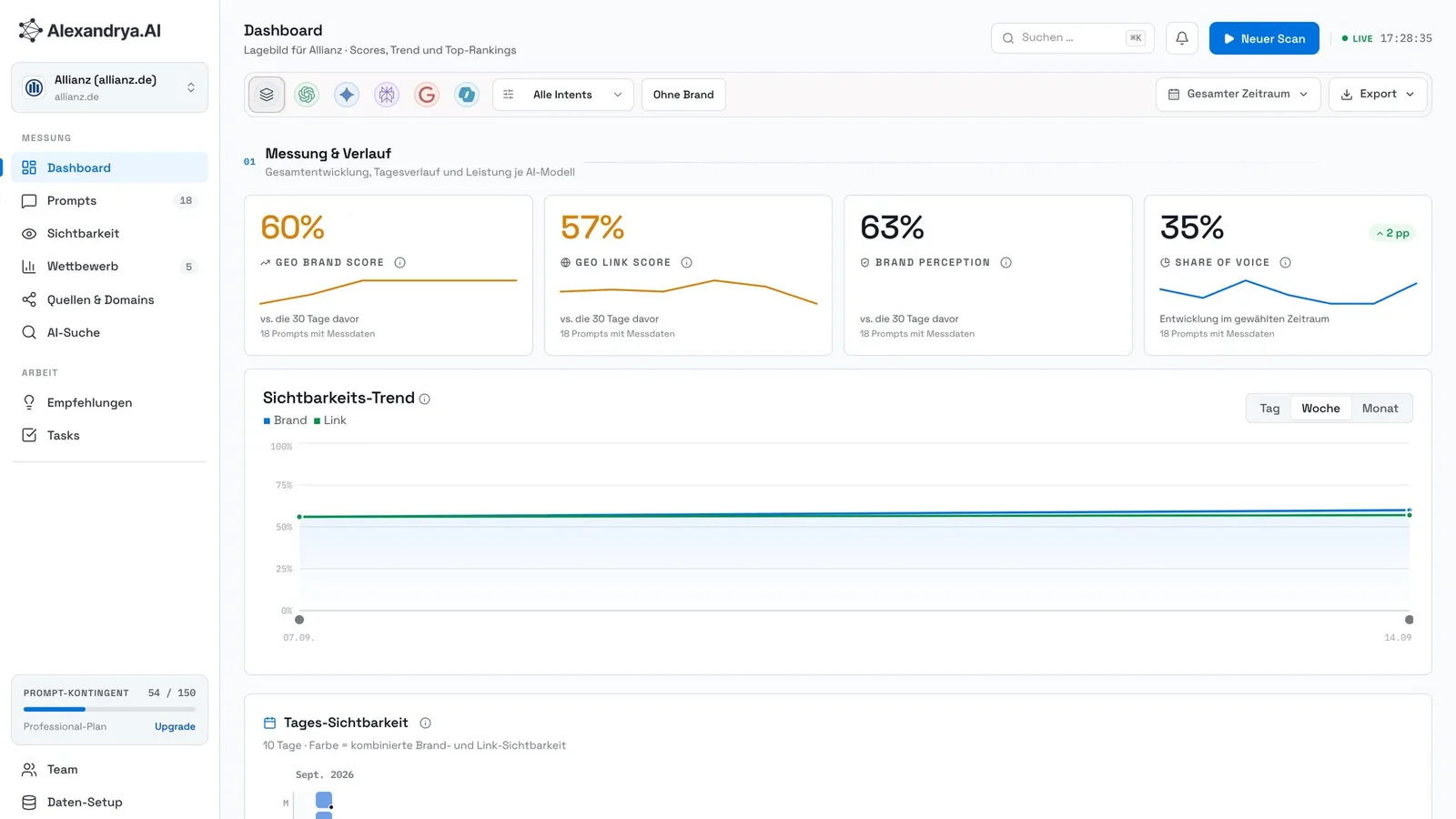
Pricing model: fixed plans in euro, German invoicing.
Disclosure: this is our own product, built after six months of using Peec AI in client projects and hitting the same three walls described above.
Alexandrya.AI is an AI visibility platform based in Munich that combines tracking, source analysis and concrete optimization recommendations. The difference from Peec AI sits one layer up. Most tools in this market deliver visibility curves and leave interpretation to you. Alexandrya.AI names three things specifically: which content to revise, which sources and backlinks carry the most leverage, and which domains and profiles you need to be listed on for the models to find you at all.
What it does
- Tracks ChatGPT, Google AI Mode, Gemini, Perplexity, Google AI Overviews, Copilot and Claude, plus platforms including Meta AI and Grok
- Measures brand mentions, share of voice, link visibility and perception, meaning the sentiment in which you are discussed
- Source and URL analysis from real answers: which domains are cited, how often, in which category (news, wiki, forum, shop, reviews) and at which position
- Prioritization by impact rather than a list of a thousand data points
- Looker Studio from Business, API and MCP access on Enterprise
- Unlimited users and daily tracking on every plan
Pricing
- Starter €79 per month: 50 prompts, three selectable models, one country
- Professional €199 per month: 150 prompts, five selectable models, three countries
- Business €399 per month: 350 prompts, five selectable models, five countries, Looker Studio
- Enterprise custom: API and MCP access, SSO, all models, expandable to every relevant country
- Seven-day free trial of the full version, billed in euro plus VAT
Strengths
- Usable immediately, no onboarding project or data team required
- You know what to do and where the biggest levers are, even without deep SEO and GEO expertise
- Claude available on the entry plan, where Peec AI reserves it for Enterprise
- Prioritized actions for content, backlinks and listings rather than raw metrics
Limits
- The tier structure resembles Peec AI's: three simultaneously active models on Starter, five from Professional
- More than one country requires Professional, more than five requires Enterprise
- For US teams, invoicing is in euro, so your dollar cost moves with the exchange rate
Start your seven-day free trial
2. Geoptie: for small teams that want four engines at a low entry price
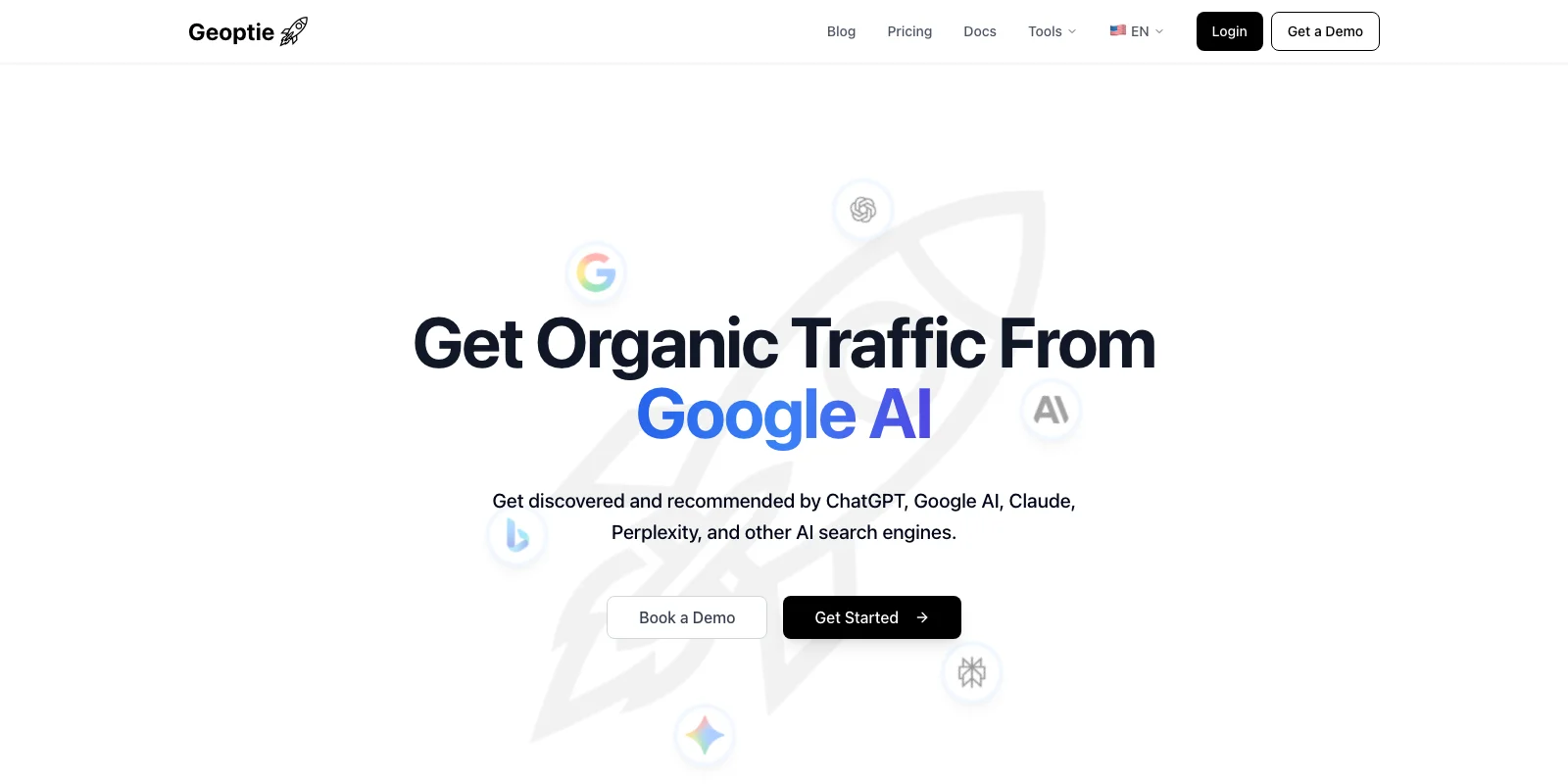
Pricing model: fixed plans in US dollars, discount for annual billing.
Geoptie is a lower-priced entrant positioning itself directly against Peec AI's engine cap, with brand-level rather than project-level organization.
What it does
- Any four of seven engines, selectable on the entry tier
- 15 prompts across two brands on the entry plan
Pricing
- Entry plan $49 per month, $41 per month billed annually
Strengths
- Four simultaneous engines at the entry tier versus Peec AI's three, at roughly half the price
- Two brands on the entry plan is unusual at this price
Limits
- 15 prompts is a diagnostic quota, not a monitoring quota
- "Any 4 of 7" is still a choose-cap, so the critique of Peec AI's model applies to Geoptie in softened form
- Several competitor figures in Geoptie's own published comparisons are out of date, weigh them accordingly
3. Profound: for enterprises with compliance requirements
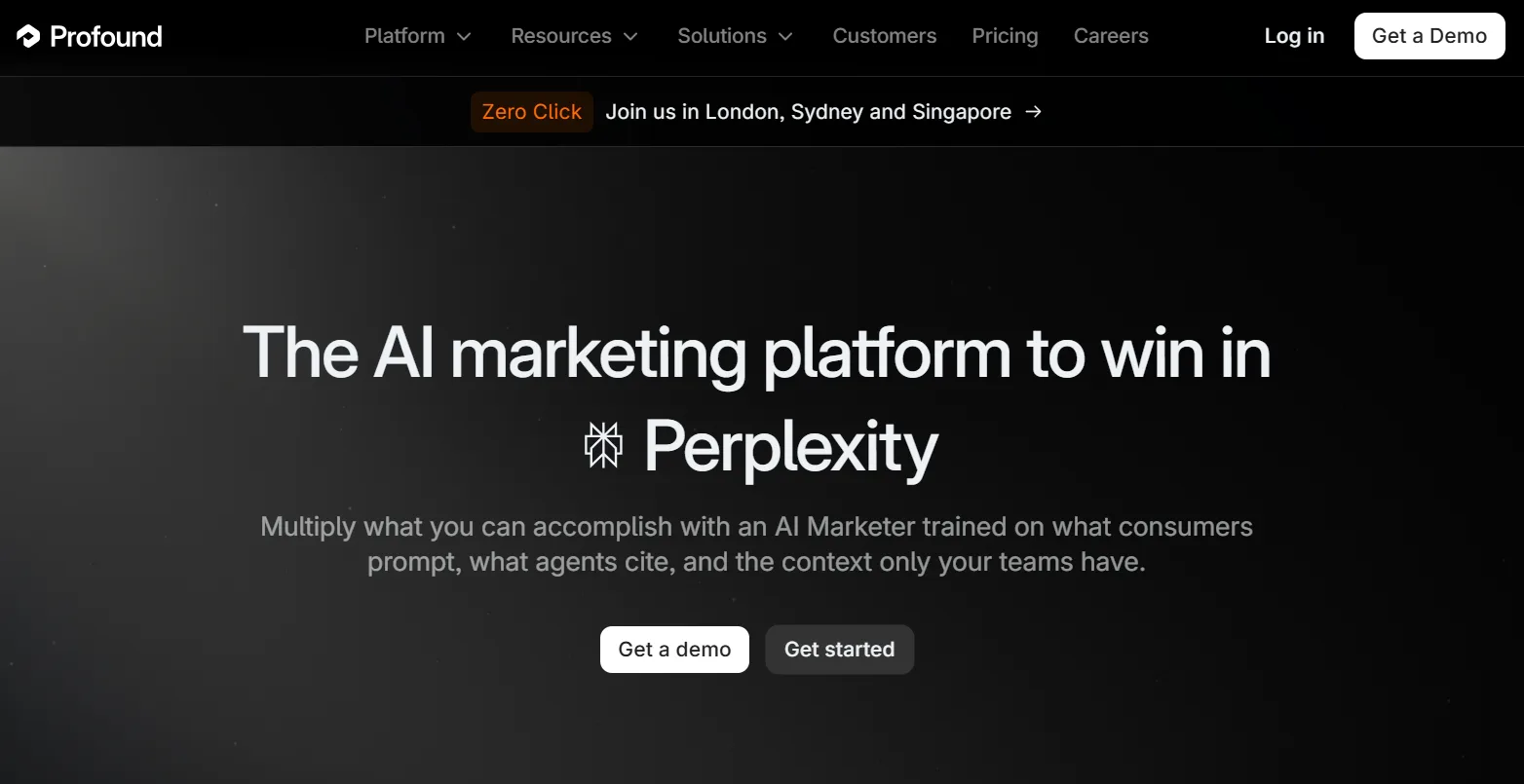
Pricing model: Enterprise only, custom price after a sales conversation.
Profound is the choice for large organizations embedding AI visibility into an existing marketing operation. Feature scope is broader than Peec AI's, access runs through sales.
What it does
- Daily tracking across up to nine answer engines
- Unlimited seats, API, exports and SSO
- SOC 2 compliance
- Agent analytics for AI traffic
- Prompt volumes and agentic workflows
Pricing
- Free trial: 10 prompts, run once on ChatGPT
- Enterprise by quote, only through a sales appointment
Strengths
- Broader feature scope than Peec AI
- SOC 2 compliance and SSO for regulated environments
- Agent analytics and prompt volumes go well beyond mention tracking
Limits
- Without a sales appointment there is no paid plan and no published price
- For mid-sized teams with a defined budget, that is a real obstacle
4. Scrunch AI: for technical SEO teams tracking crawler behavior
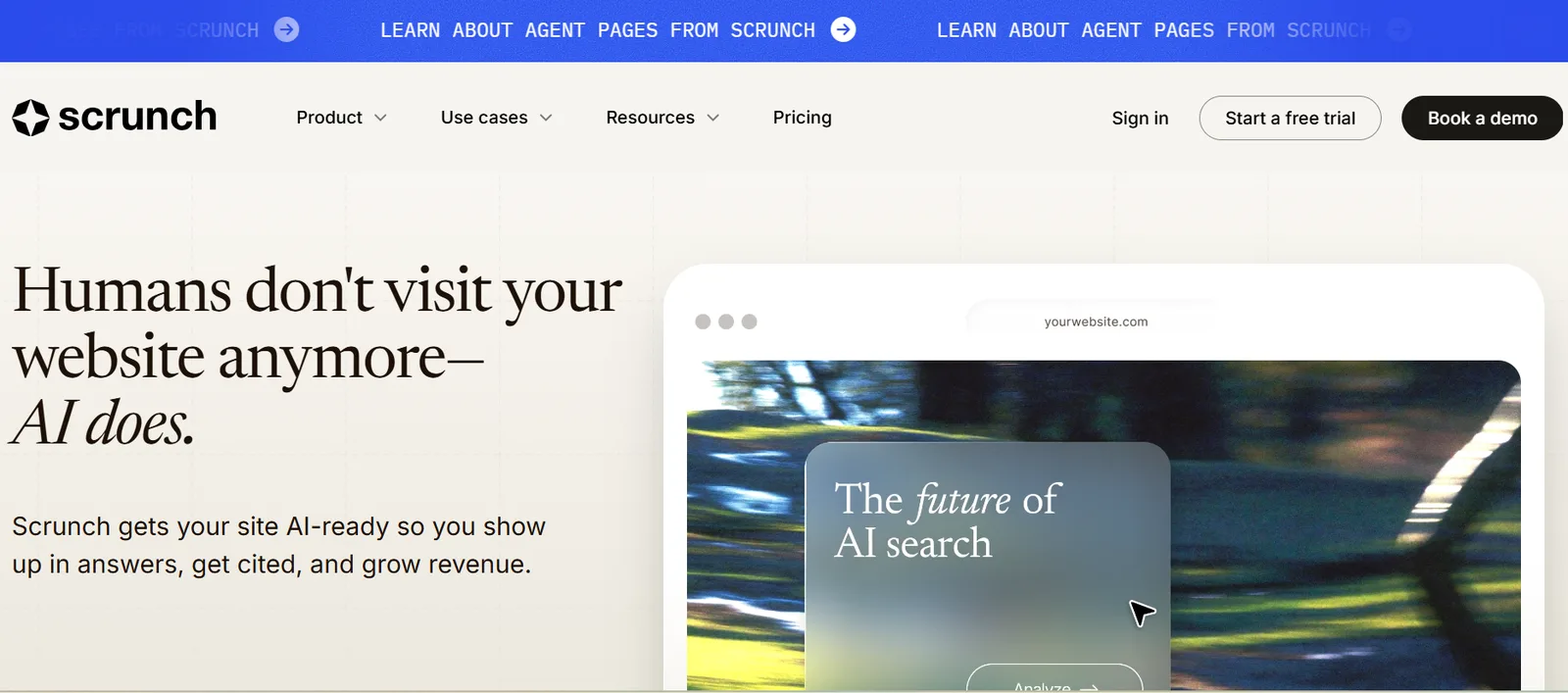
Pricing model: fixed plans in US dollars, discount for annual billing.
Scrunch targets technical SEO teams that want to understand how AI crawlers behave on their own site alongside citation tracking. It positions itself as an agent experience platform.
What it does
- Citation tracking plus analysis of AI crawler behavior on your own site
- Agent-readable page variants
- 350 own prompts and 1,000 industry prompts on Starter
Pricing
- Starter $300 per month, or $250 per month billed annually: 350 own prompts, 1,000 industry prompts, three seats (according to the Ryze comparison)
Strengths
- Lowest price per prompt in this comparison
- Crawler analysis that Peec AI does not offer in this form
- Agent-readable page variants as a distinct capability
Limits
- Three seats is stricter than Peec AI's unlimited users
- Several sources report a Sitecore acquisition in June 2026, verify the current status directly with the vendor before signing
5. Otterly.AI: for solo SEOs and small teams
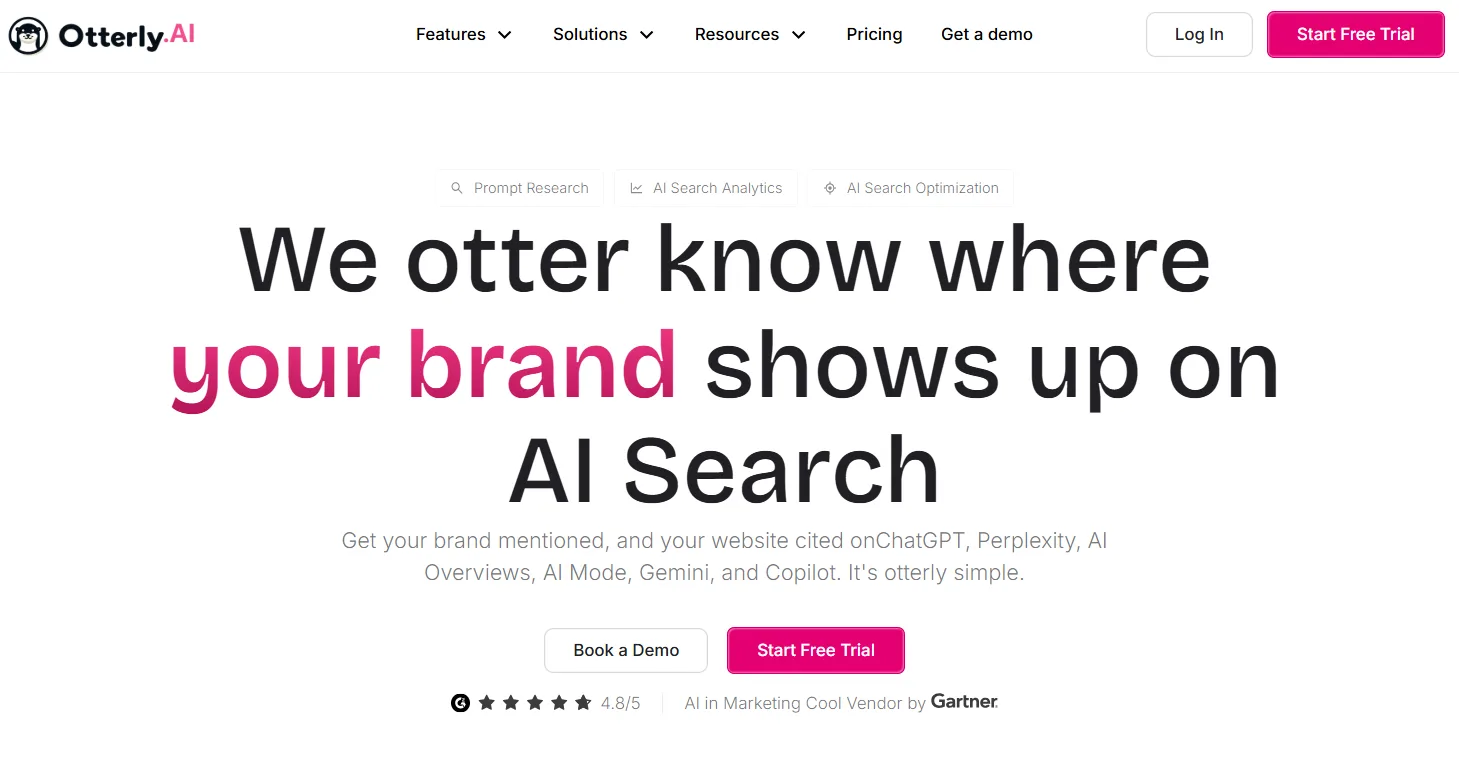
Pricing model: fixed plans in US dollars plus per-engine add-ons.
Otterly.AI is the cheapest serious entry point here. Entry coverage is broader than Peec AI's, but the prompt quota on Lite is much smaller.
What it does
- Four engines on every tier: ChatGPT, Google AI Overviews, Perplexity and Microsoft Copilot
- Claude, Google AI Mode and Gemini as paid add-ons
- Google AI Mode and Gemini cost $9 (Lite), $59 (Standard) and $149 (Premium) each
- Claude costs $29 (Lite), $109 (Standard) and $439 (Premium)
Pricing
- Lite $29: 15 prompts
- Standard $189: 100 prompts
- Premium $489: 400 prompts
- Enterprise from $1,000
- Billed in US dollars plus tax
Strengths
- Cheapest serious entry point in the whole comparison
- Four engines already included on Lite
- Add-on prices published clearly per tier
Limits
- The cheap entry collapses once you need full coverage: all three add-ons on Premium mean $489 + $149 + $149 + $439 = $1,226 per month
- Claude is the expensive one, on Premium the add-on costs nearly as much as the base plan
- Fifteen prompts on Lite is thin for a real evaluation
6. Rankscale: for teams that want to control frequency and model mix
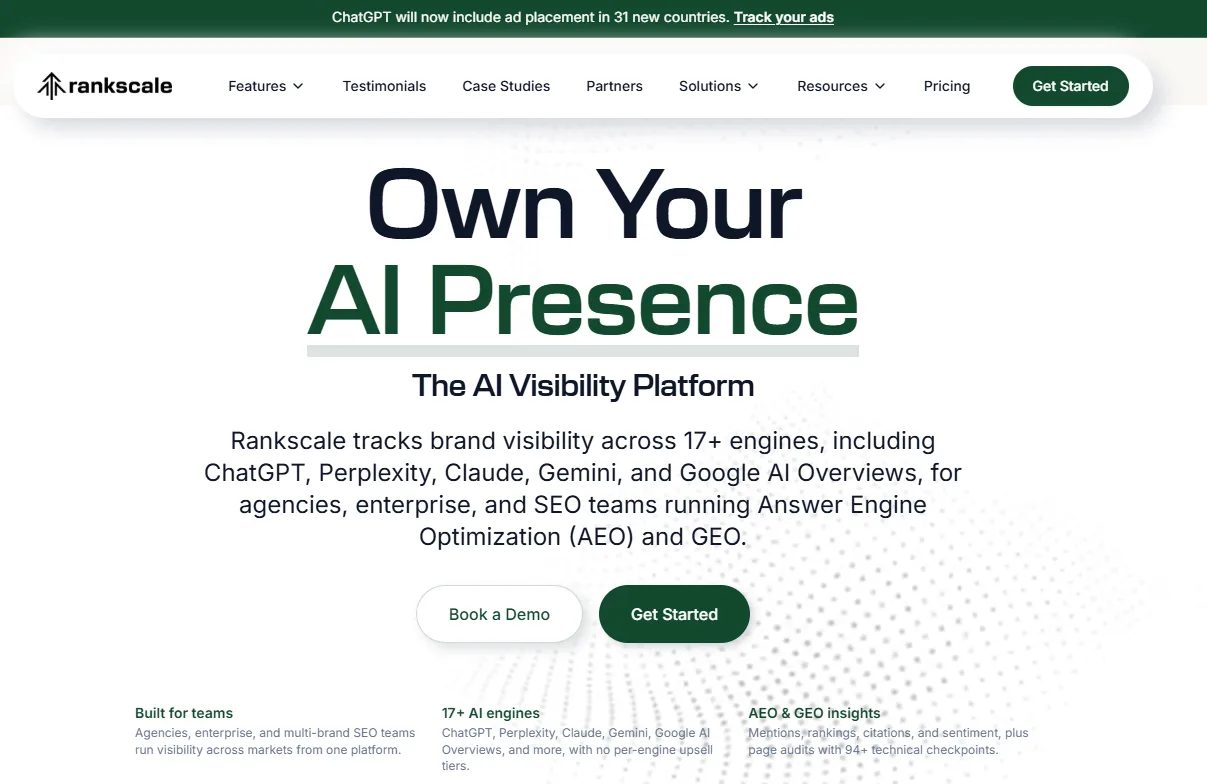
Pricing model: credits, typically 0.25 credits per engine per query.
Rankscale is right if you would rather steer measurement frequency and model selection yourself than buy a fixed prompt quota. The company is based in Vienna. The advantage over Peec AI is freedom: every engine is available on every tier.
What it does
- All engines on all tiers, including ChatGPT, Perplexity, Google AI Mode, AI Overviews, Gemini, DeepSeek, Mistral, Claude, Grok and Copilot
- Freely selectable frequency from hourly to monthly
- Unlimited seats, MCP included, REST API from Growth
- Shopping and ad analytics
- Query fan-out analysis showing which internal searches a model actually issues when answering your prompt
- More expensive models such as Claude cost up to 2 credits
Pricing
- Essentials $20 per month
- Pro $99: 1,200 credits, 10 brand dashboards, 50 page audits
- Growth $385: 5,500 credits, REST API
- Enterprise $780: 12,000 credits
- 15% off annually, unused credits roll over up to two or three times the monthly allowance
- Pro can be tested free for seven days
Strengths
- No model restriction at any price
- Query fan-out analysis is close to unique
- European vendor with unlimited seats and MCP on every tier
Limits
- The credit model demands planning
- Measuring many prompts daily across many engines burns the allowance fast
- Budgeting is less predictable than with a fixed prompt price
7. PromptWatch: for teams that need API and MCP without an Enterprise contract
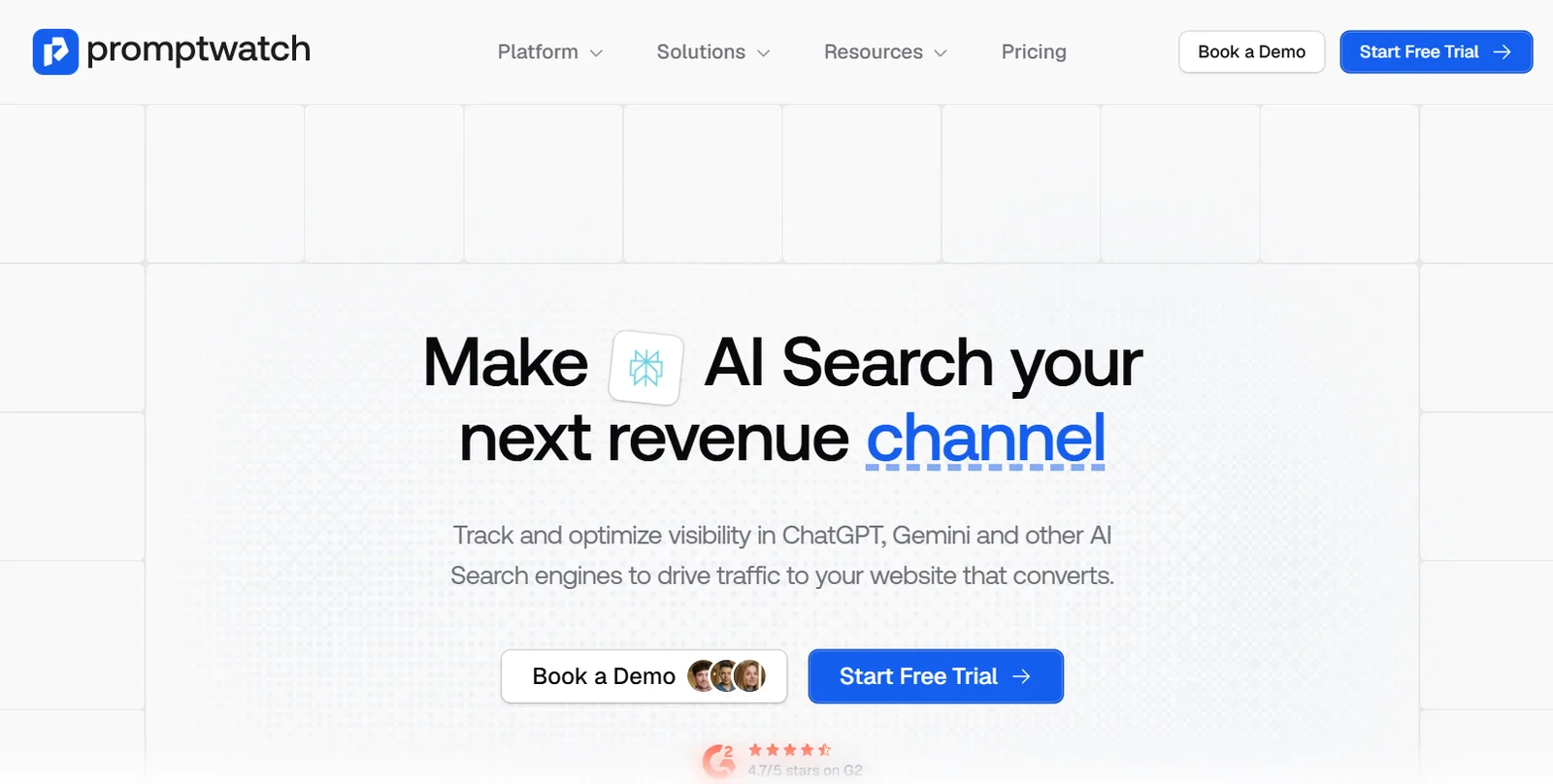
Pricing model: fixed plans in US dollars plus credits for content agents.
PromptWatch suits teams that need four models on the entry tier and want to pipe data elsewhere. The company operates as PromptWatch B.V. in Amsterdam with a second location in New York and cites more than 1,780 brands and agencies as customers.
The methodological difference from Peec AI: PromptWatch states that it collects data by reading the models' actual chat interfaces rather than their APIs, which sits closer to what users really see.
What it does
- Four simultaneously tracked models from the entry tier
- MCP and API access on the cheapest plan, not only on Enterprise
- Integrations with WordPress, Webflow, Framer, Google Search Console and Slack
- Crawler logs via Cloudflare, Fastly or Vercel
- Content agents that generate articles from citation data, five per month on Professional
- Shopping insights and state and city level tracking on Business
Pricing
- Starter $95 per month: 1 project, 50 prompts, 4 models, 6,000 answers
- Professional $245: 2 projects, 150 prompts, 18,000 answers
- Business $579: 5 projects, 350 prompts, 42,000 answers
- Seven-day free trial
Strengths
- MCP and API without an Enterprise contract
- Data collection via real chat interfaces instead of APIs
- Broad integration landscape including crawler logs
Limits
- Billed in US dollars
- Entry sits above both Peec AI and Alexandrya.AI
- The agent credit model makes cost forecasting murky once you lean on the content features
8. AthenaHQ: for teams that want different check frequencies per prompt
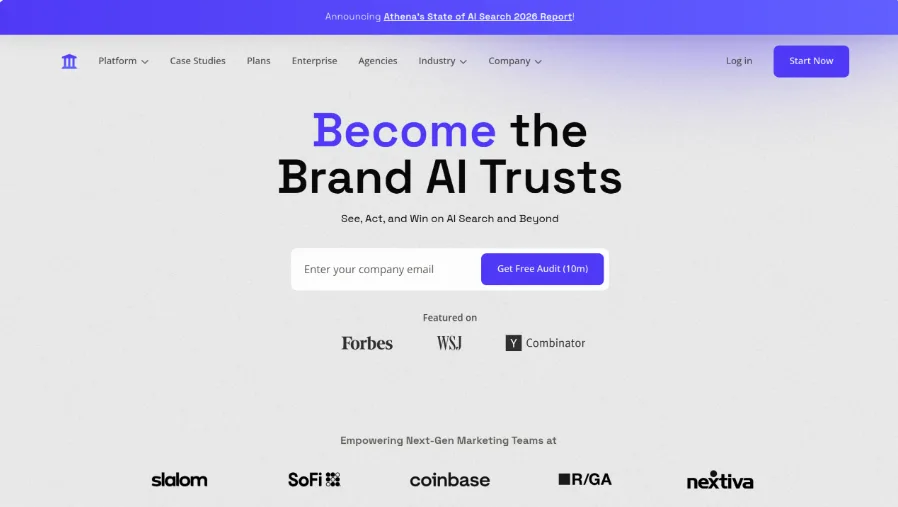
Pricing model: credits, one credit equals one AI response.
AthenaHQ fits teams that want to check some prompts daily and others less often, rather than paying for a rigid quota. The model rewards focus and penalizes breadth, the exact inverse of Peec AI's logic.
What it does
- Credit billing instead of fixed prompt quotas
- Freely controllable check frequency per prompt
- Up to nine models on Starter
Pricing
- Free tier: 300 credits, five models
- Starter around $295 per month: 3,600 credits, nine models, roughly 40 prompts tracked daily across three models
Strengths
- A free tier that works as a real entry point
- Per-prompt frequency control
- Nine models on the paid entry plan
Limits
- The model punishes broad engine coverage
- Independent pricing for additional credits is not published, which complicates budgeting
9. Writesonic: for teams that want tracking and content production in one place
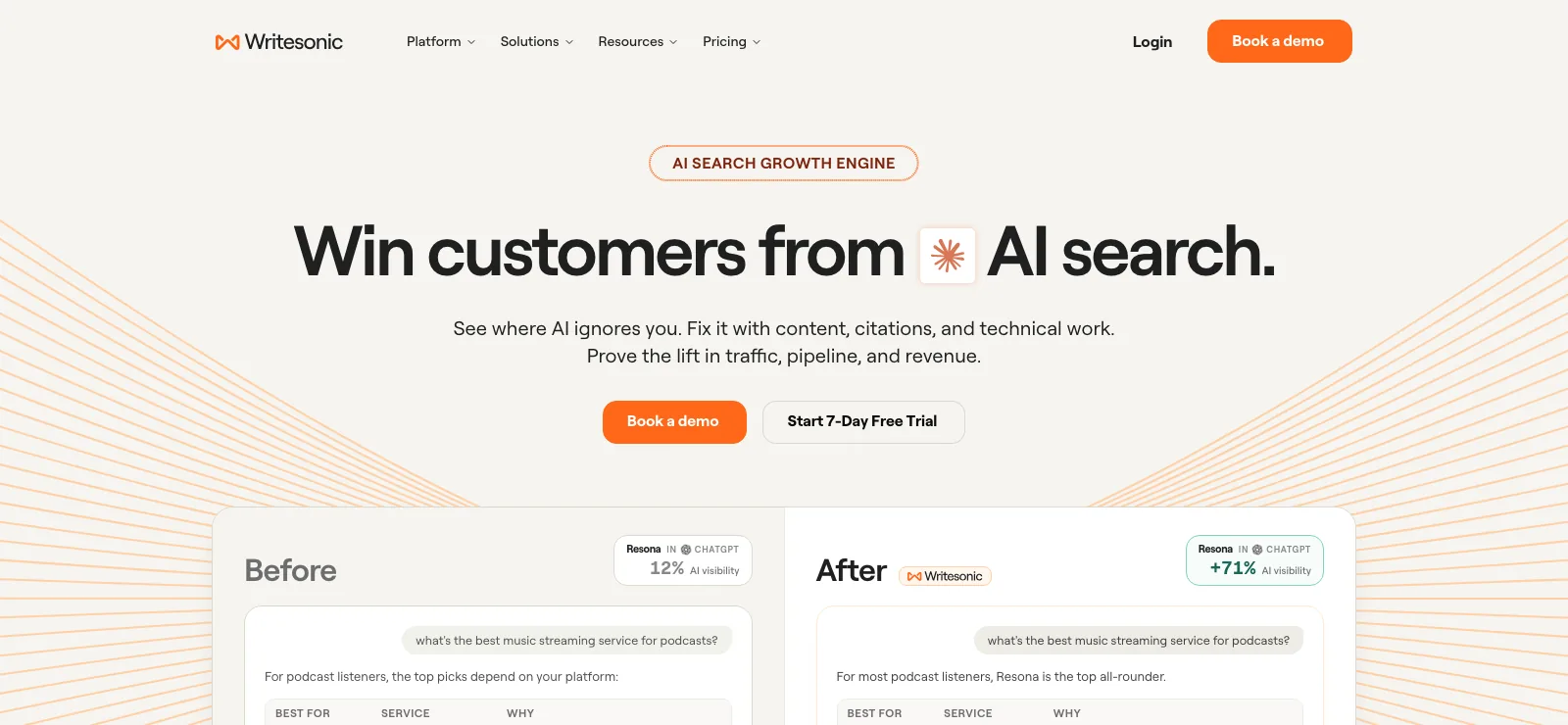
Pricing model: fixed plans in US dollars, 20% discount billed annually.
Writesonic combines AI visibility tracking with article generation and site audits, aimed at teams that want to measure and fix in one subscription.
What it does
- Tracks ChatGPT, Gemini and Google AI Overviews on all paid self-serve tiers
- All 10 platforms, including Claude, Perplexity, Grok, DeepSeek, Copilot, Meta AI and Google AI Mode, on Enterprise only
- Ads monitoring on every tier, sentiment analysis from Growth
- Action Center from Growth (limited) and in full on Enterprise
- AI article writer, site audits and agentic workflows
Pricing (annual billing)
- Starter $79: 50 prompts, 50 answers daily, 15 articles, 1 user, 1 project
- Basic $199: 100 prompts, 300 answers, 25 articles, 2 users
- Growth $399: 200 prompts, 600 answers, 50 articles, 3 users, 2 projects
- Enterprise custom, extra users $50 per month
- Agencies: Agency Starter $200 for up to 20 pitch projects, Agency Enterprise custom
Strengths
- The only tool here bundling tracking, article production and site audits at this price
- One market included on every self-serve tier
- Ads monitoring across all plans
Limits
- Three engines on Starter, Basic and Growth alike
- Claude and Perplexity require Enterprise, a harder wall than Peec AI's, which at least sells add-on models
- Only one market until Enterprise, and seats are charged individually
- Agentic workflows are capped at trial runs even on Growth
10. Semrush AI Visibility Toolkit: for teams already paying for Semrush
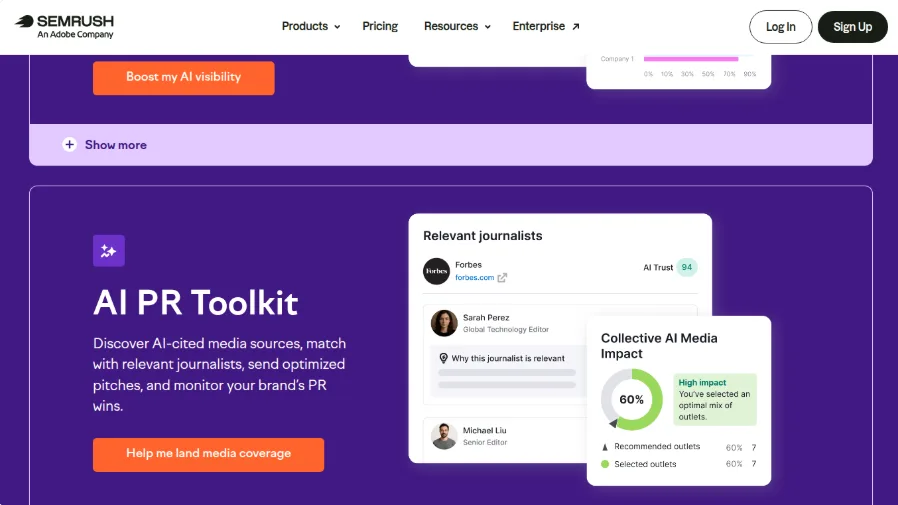
Pricing model: add-on per domain in US dollars, on top of the Semrush subscription.
The Semrush module makes sense mainly if you already use Semrush. It adds AI visibility beside classical SEO data and spares you another tool in the stack. The advantage is integration, not measurement depth.
From our own practice: we have worked with Semrush for more than six years and still rate it as an SEO platform. But the GEO features sit awkwardly inside a very large interface, and even as power users we find it hard to separate GEO work from classical SEO work. That separation matters, because the two disciplines need different measures. We run GEO deliberately separately, in a focused tool.
What it does
- 25 own prompts and four engines on self-serve
- AI visibility right next to classical SEO data in one interface
Pricing
- Self-serve around $94 per month and domain: 25 own prompts, four engines
- Extra cost for additional domains, users and prompts
Strengths
- No extra tool for existing Semrush teams
- SEO and AI data in one interface
- Established platform with a long-standing SEO data foundation
Limits
- Lower prompt depth than Peec AI, and the cost per prompt is the highest in this comparison
- GEO work is hard to separate from SEO work in the large interface
- Too diffuse as a standalone GEO solution
11. Ahrefs Brand Radar: for research rather than daily monitoring
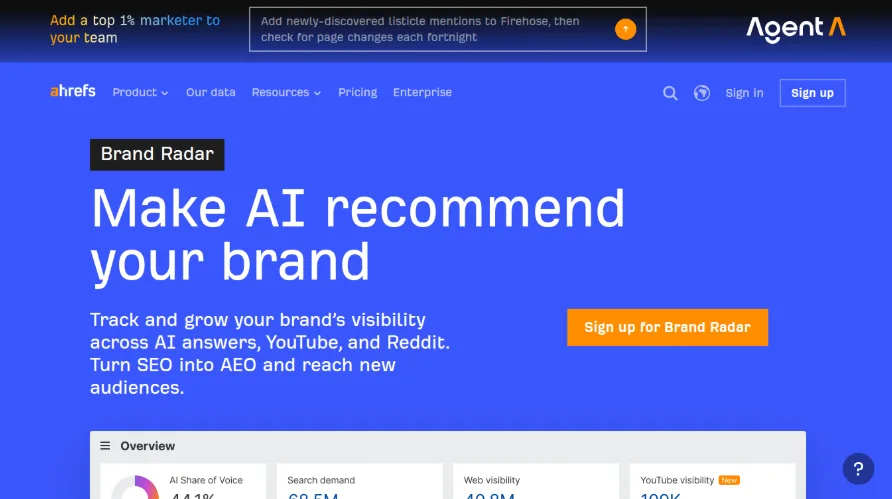
Pricing model: additional price per AI index, on top of an Ahrefs subscription.
Brand Radar is a research instrument more than a daily monitoring dashboard. Against Peec AI you gain research depth and filter logic, and lose value for money on pure brand monitoring.
What it does
- A data basis drawn from real search queries rather than synthetic prompts
- The vendor cites hundreds of millions of prompts
- Filter logic and research depth across brands
Pricing
- Around $199 per AI index
- Up to $699 for all indexes
- Each on top of the Ahrefs subscription, published figures differ considerably by source
Strengths
- Data basis from real search behavior rather than your own prompt guesses
- Substantial research depth and strong filter logic
- Sensible if you already run Ahrefs
Limits
- Index costs stack up quickly for agencies
- Poor value for pure brand monitoring
- Pricing differs considerably by source, confirm with Ahrefs before budgeting
12. SE Visible (SE Ranking): for maximum prompts per dollar
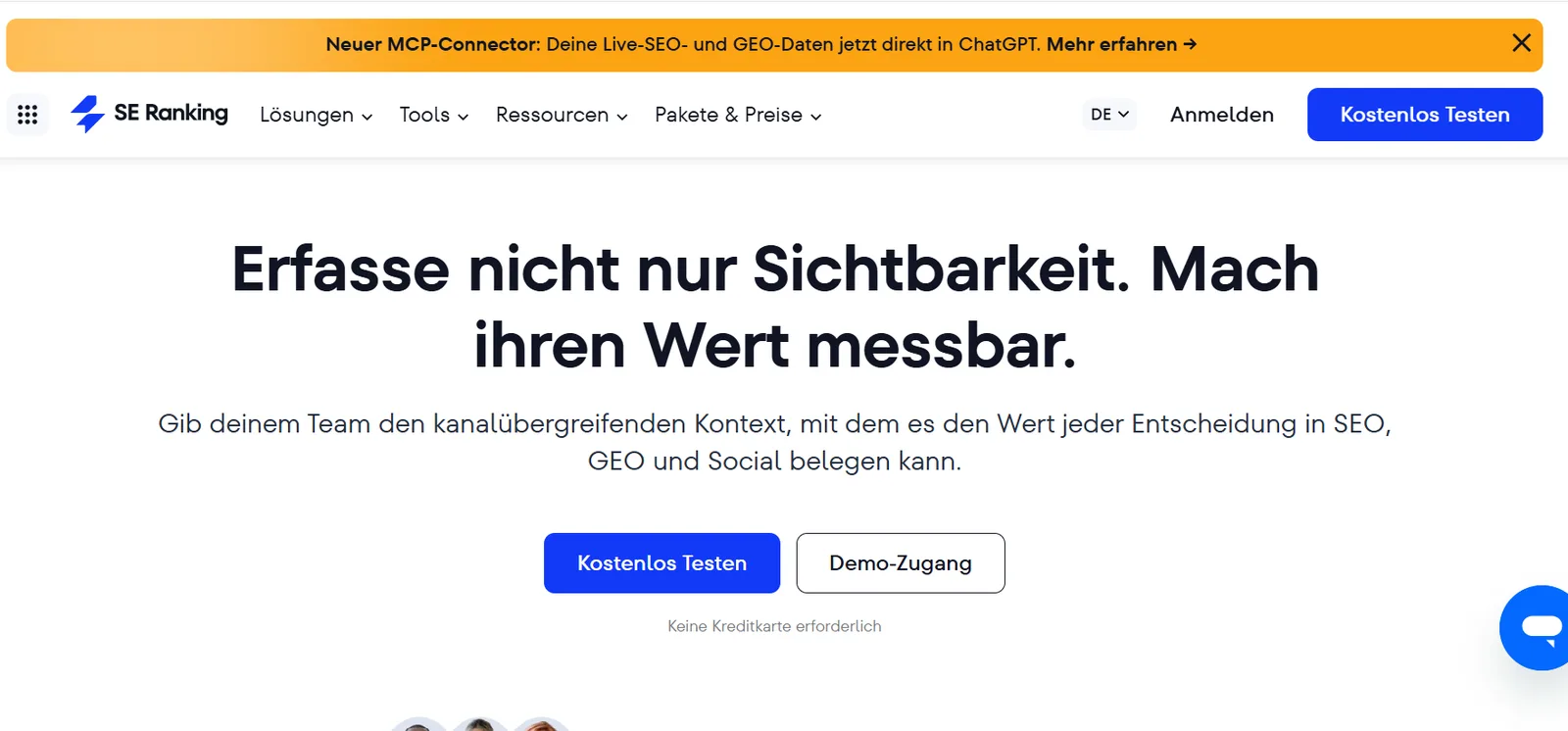
Pricing model: standalone product alongside the SEO suite, fixed plans in US dollars.
SE Visible is SE Ranking's answer to AI visibility. It is not a module inside the SEO plans but a separately bookable product with its own price list. That is the decisive point for your budget: existing SE Ranking customers do not get AI tracking included, they pay extra. In return, prompt volume relative to price is among the most generous here.
What it does
- Five engines on every tier: ChatGPT, Gemini, Google AI Mode, Perplexity and Google AI Overviews
- 200 prompts already on Basic
- Source and citation analysis, sentiment and competitive comparison
Pricing
- Basic $99 per month: 200 prompts, five engines
- Higher tiers up to $355 per month with correspondingly larger prompt quotas
- On top of an SEO plan, if you want to use the suite in parallel
Strengths
- Five engines at the cheapest tier without add-on surcharges
- 200 prompts at entry is four times what Peec AI Starter offers
- Lowest cost per prompt among vendors with fixed quotas
Limits
- Not included in the SEO plans, if you want both, you pay twice
- Source analysis is shallower than on specialized platforms
- No Copilot and no Claude
- The action layer is missing: you get metrics and sources, not a prioritized task list
13. HubSpot AEO (Beta): for a first AEO measurement without a budget request
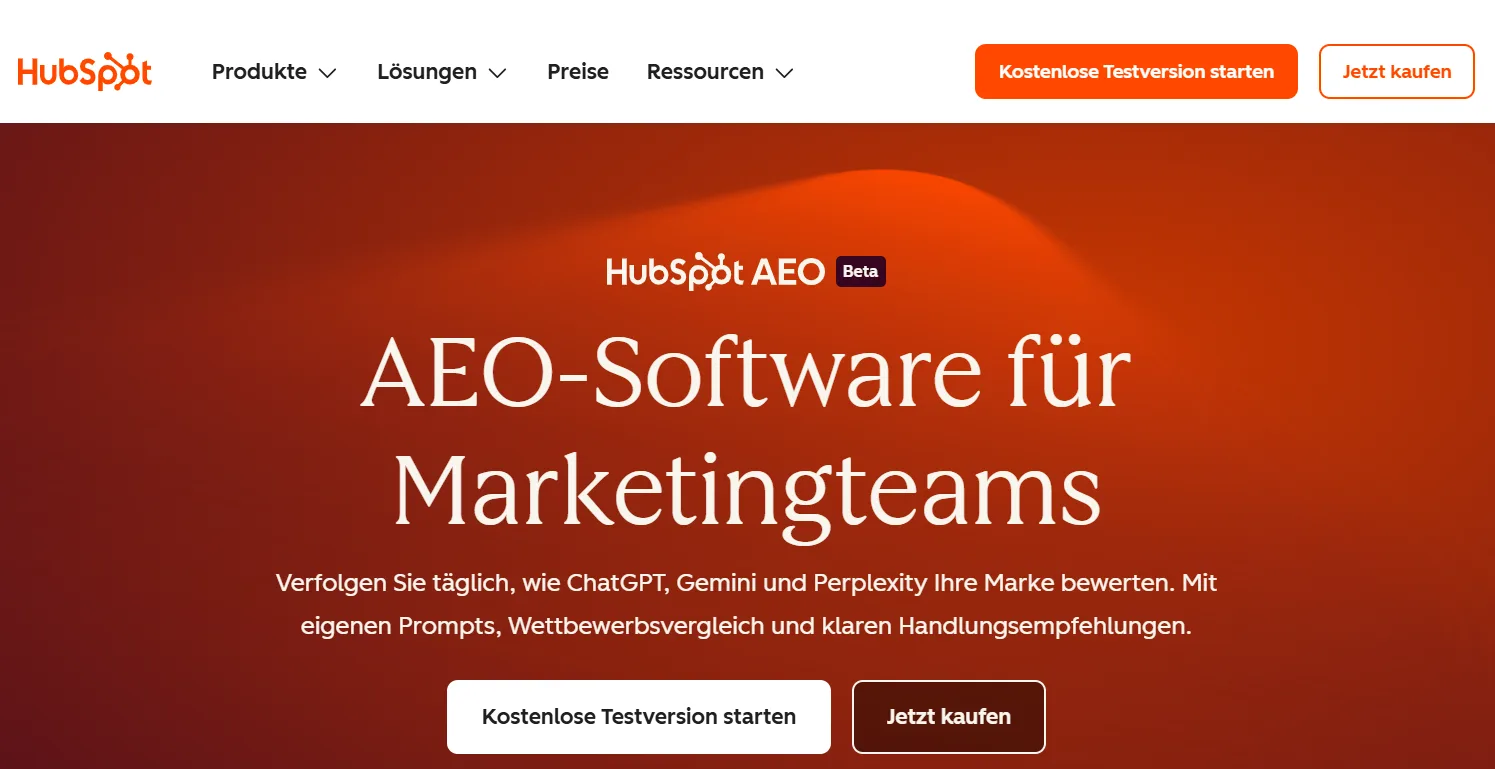
Pricing model: fixed monthly price in euro, no annual commitment, beta phase.
HubSpot AEO is one of the cheapest credible entry points here and targets marketing teams already working inside HubSpot. The technology comes from HubSpot's 2026 acquisition of XFunnel. Against Peec AI the price level is unbeatable and the depth is markedly lower.
We have been HubSpot power users for more than six years. We started at just under €200 per month, today HubSpot charges us a four-figure sum monthly for the add-ons our sales and marketing work requires. Worth knowing before you treat €49 as the whole cost of the ecosystem.
What it does
- 25 prompts across three engines: ChatGPT, Gemini and Perplexity
- AI visibility score, sentiment analysis and share of voice against competitors
- Source analysis by domain and content type
- Prioritized recommendations
- No HubSpot CMS required, measurement works independently of your hosting
Pricing
- AEO Beta €49 per month, no annual commitment: 25 prompts, three engines
- Additional prompts purchasable, each brand requires its own €49 instance
- 28-day free trial with the same 25 prompts, no credit card
Strengths
- Price level without competition in this field
- Prioritized recommendations rather than raw scores
- A 28-day trial without a credit card is the most pragmatic starting point in the whole comparison
Limits
- 25 prompts is a starter quota
- Google AI Mode and AI Overviews are missing from the engine list, a serious gap for US teams
- The tool only reaches its real value alongside Marketing Hub and the content tools, which cost extra
14. SISTRIX AI Visibility: for DACH teams that report on the SISTRIX Visibility Index
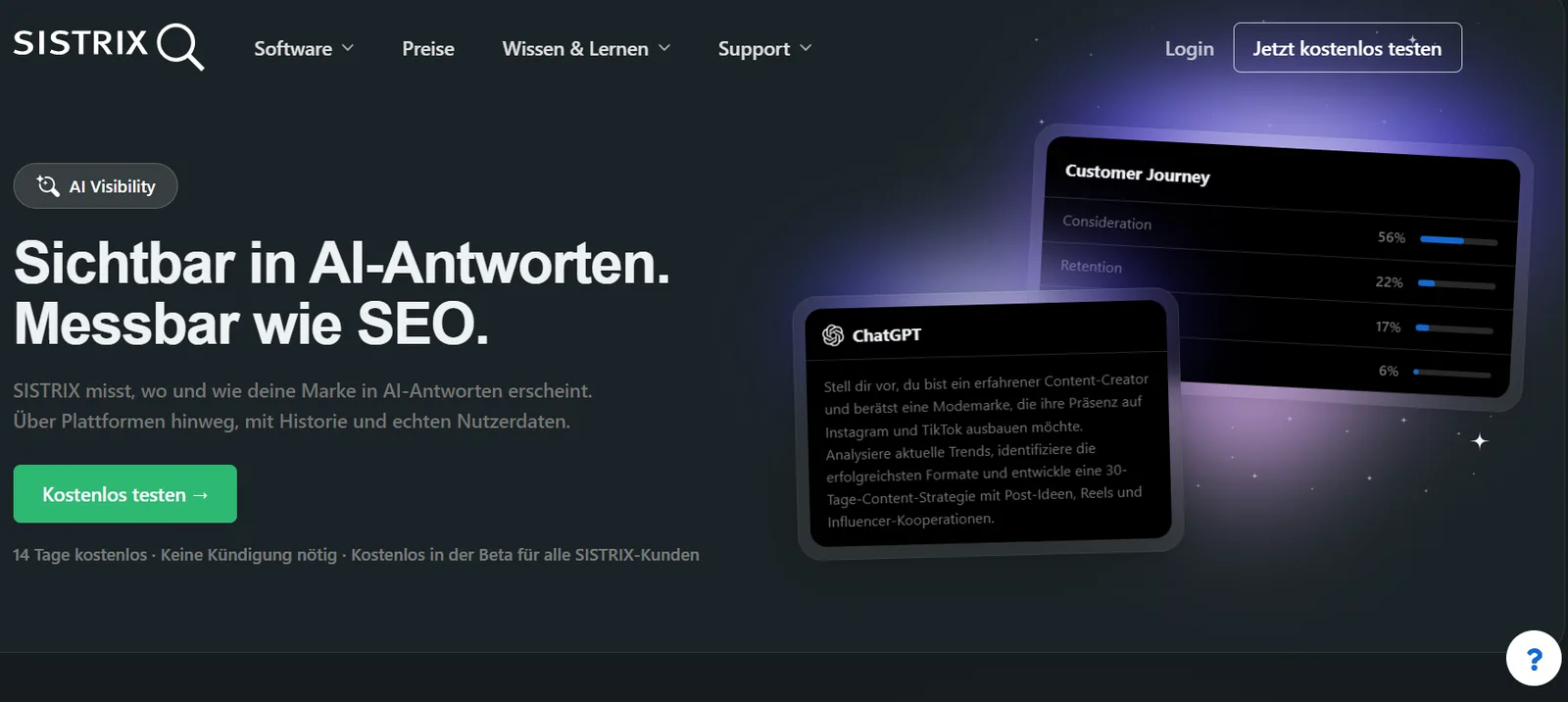
Pricing model: fixed plans in euro, AI module included at no extra charge during the beta.
SISTRIX is the obvious option for teams in Germany, Austria and Switzerland that already use its SEO Visibility Index as their reporting currency. The Bonn-based company has expanded its AI module considerably and includes it in every plan at no extra cost while it is in beta. Outside the DACH region it matters less, but if your company reports on SISTRIX, it belongs on the list.
What it does
- Four tracked platforms: Google AI Overviews, Google AI Mode, ChatGPT and Perplexity
- Prompt monitoring with sentiment and competitors
- Its own AI visibility index and entity analysis
- A search area that evaluates a set of several million pre-queried prompts, so you can see a brand's visibility without setting up a tracking project
- API from Professional, with a Looker Studio connector covering the entire API
- Phone and premium support in German from Professional
Pricing
- Start €119 per month: 100 prompts
- Plus €239 per month: 300 prompts
- Professional €419 per month: 600 prompts, API
- Premium €799 per month: 1,500 prompts
- All excluding VAT, cancellable monthly
Strengths
- If you already pay for SISTRIX, AI Visibility currently comes at no extra charge as a beta
- German vendor with German-language phone and premium support
- The search area delivers visibility data without a tracking project of your own
Limits
- The GEO features sit inside a very large SEO interface, and separating SEO work from GEO work is hard day to day, we know that from our own experience
- The search area queries foundation models whose answers only change with a new model, SISTRIX discloses this itself. For dynamic, web-grounded answers you need the individual prompt monitoring
- No Copilot, no Gemini and no Claude
- Not enough as your only GEO solution if you are serious about the goal
Which alternative fits which team?
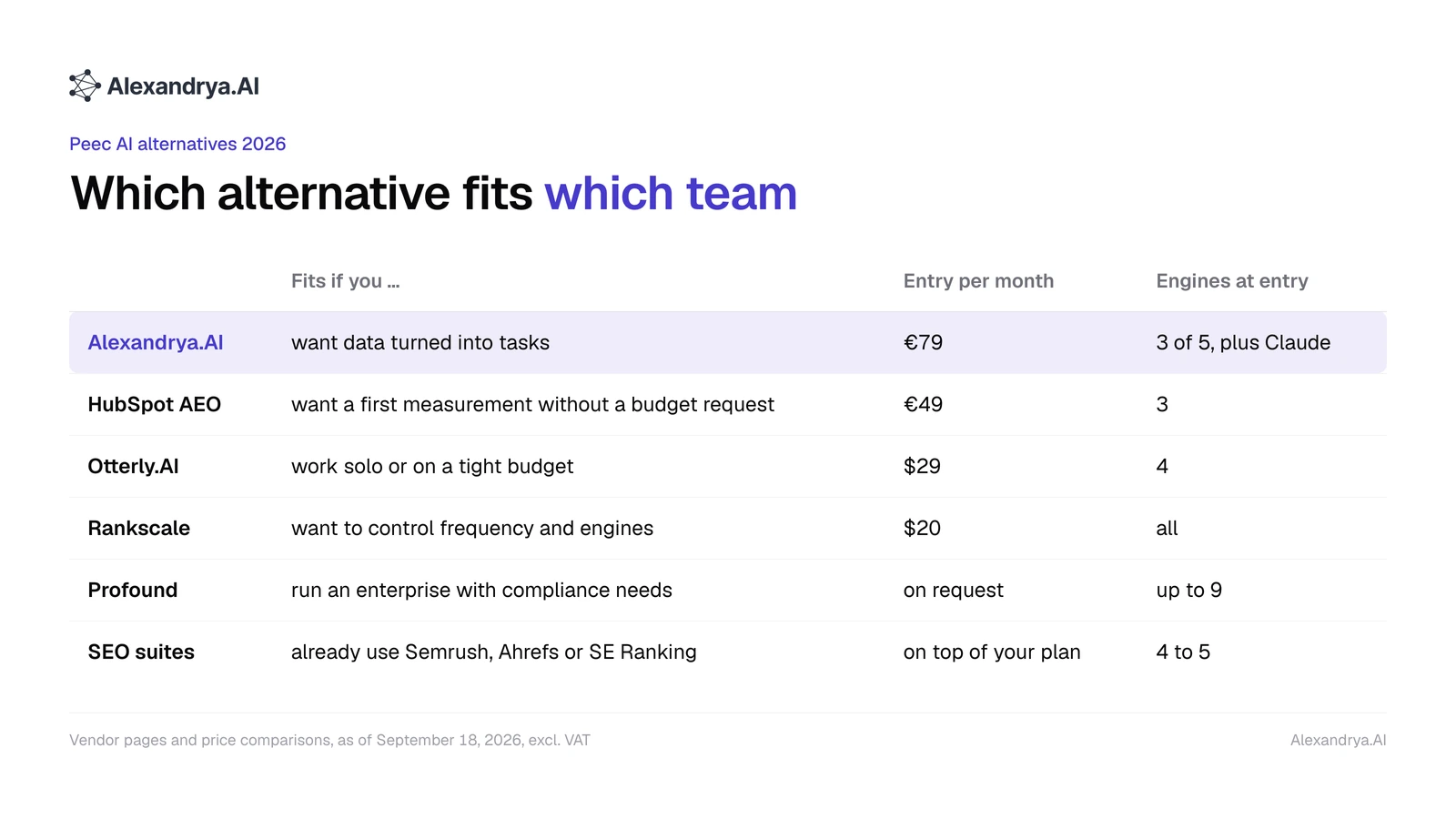
Seven typical starting positions cover most decisions:
- You want visibility data translated into concrete action, not just monitoring: Alexandrya.AI, from €79 per month, seven days free first.
- You want to measure AEO for the first time without requesting budget: HubSpot AEO at €49 with 25 prompts, 28 days free first.
- You are a solo SEO: Otterly.AI Lite at $29 with four engines included, or Geoptie at $49 for four of seven.
- You need maximum prompts per dollar: SE Visible at $99 for 200 prompts.
- You are an enterprise with many markets and compliance requirements: Profound, price on request.
- You are a technical SEO team wanting crawler behavior and citations together: Scrunch AI.
- You want to control frequency and engine selection yourself: Rankscale's credit model, Pro from $99.
- You already work in Semrush, Ahrefs, SE Ranking or SISTRIX: the respective AI module, provided 25 to 600 prompts is enough.
If you want pure GEO monitoring and your team already answers "what do we do with this data?" internally, Peec AI remains a good fit. Switching only becomes a topic when a specific limit bites or the action layer is missing.
How do you migrate from Peec AI cleanly?
A valid tool comparison needs identical conditions, otherwise you are comparing measurement noise. Plan two to four weeks of parallel operation.
- Freeze your prompt set. Export it and transfer it unchanged. Rewording prompts changes the answers.
- Activate the same models. Compare only engines both tools actually measure, and document the selection.
- Set the same countries and languages. A German-language prompt from Germany is a different measurement point than the same prompt in English.
- Measure in parallel for at least 14 days. AI answers fluctuate substantially, shorter windows tell you nothing reliable.
- Expect no historical data transfer. None of these tools imports another's history. Export your Peec history as CSV before you cancel.
- Evaluate deviations, do not argue them away. Different visibility scores are normal because every vendor measures differently. What matters is the direction of the curve and whether the cited sources agree.
Frequently asked questions about Peec AI alternatives
What does Peec AI cost?
Peec AI runs two price lists. Brand plans start at €85 per month: Starter €85 (50 prompts, 3 models, 1 project), Pro €205 (150 prompts, 2 projects), Advanced €425 (350 prompts, 5 projects, multi-country, Looker Studio), Enterprise custom with up to 13 models, API and SSO. Agency plans bill in credits: Essential €205 for 10,000 credits, Growth €425 for 25,000, Scale €675 for 65,000. Additional models cost €30, €70 or €140 per month depending on the tier. Alexandrya.AI starts at €79 per month with the same 50 prompts, three selectable models, daily tracking and unlimited users.
Is there a free Peec AI alternative?
Yes, with clear limits. Profound offers a free trial with 10 prompts run once on ChatGPT. AthenaHQ has a permanent free tier with 300 credits and five models. HubSpot AEO gives you 28 days with 25 prompts, no credit card, and SISTRIX includes its AI module in every plan at no extra charge during the beta. None of these is enough for ongoing monitoring, so treat them as an initial diagnosis. For regular measurement, use a trial period, such as the seven days of the full version at Alexandrya.AI.
Which Peec AI alternative is the cheapest?
By list price, Rankscale Essentials at $20 per month, followed by Otterly.AI Lite at $29, Geoptie at $49 and HubSpot AEO at €49. All four are tightly limited on prompts. Calculate the cost per prompt including the engines you actually need, not the headline price. If you already pay for SISTRIX, its AI features currently come at no extra charge during the beta. Among specialized platforms with daily tracking and 50 prompts at entry, Alexandrya.AI at €79 sits just below Peec AI at €85.
Which AI platforms should a GEO tool track at minimum?
For the US market, four are mandatory: ChatGPT, Google AI Overviews, Google AI Mode and Perplexity. Microsoft Copilot matters in B2B environments running Microsoft 365, and Claude for technical and developer audiences. Treat Google AI Mode as a separate surface, not a synonym for AI Overviews, because several tools here cover one and not the other.
Why does Peec AI only allow three active models?
Because the Starter, Pro and Advanced plans specify three simultaneously active models. Six are available on all self-serve plans: ChatGPT, Google AI Mode, Google AI Overviews, Microsoft Copilot, Naver AI and Gemini. The reason is the billing model: Peec bills in AI answers, meaning prompts times active models times frequency, so each additional model multiplies queries and cost. Extra models can be added in the dashboard for €30, €70 or €140 per month depending on the tier. Enterprise removes the limit.
Does Peec AI track Claude?
Only on Enterprise. Claude Sonnet 4 is not among the six self-serve models and does not appear in the add-on list either, which covers only ChatGPT, Google AI Mode, Google AI Overviews, Microsoft Copilot, Perplexity and Gemini. On Enterprise, Claude Sonnet 4 arrives via API alongside GPT-5 Search, Grok, DeepSeek, Qwen, Mistral, Meta Spark and Perplexity, for up to 13 models in total. If you want Claude without an Enterprise contract, Alexandrya.AI includes it from €79 per month, Rankscale makes all engines available on every tier, and Otterly.AI sells it as an add-on from $29.
Is a general SEO tool like Semrush or Ahrefs enough?
For getting started, yes. For systematic optimization, usually not. The AI modules in SEO suites typically cover 25 to 200 prompts and deliver less source and sentiment depth than specialized platforms. They make sense if you already pay for the suite and treat AI visibility as an additional dimension. Once AI visibility becomes its own objective with its own reporting, you need a dedicated tool.
How long until AI visibility improves measurably?
There are no reliable universal timeframes, results vary sharply by industry, competitive density and starting position. What can be said: since more than 65% of the content in AI answers comes from third-party sources according to McKinsey, work on external sources like reviews and trade articles typically takes longer to show than changes on your own site. Plan in quarters, not weeks, and evaluate trends rather than daily values.
Can I test two GEO tools in parallel?
Yes, and for a well-founded decision it is the only clean approach. Use the same prompt set, the same models and the same period of at least 14 days. Expect different absolute values, because every vendor defines visibility differently. What is comparable is the trend direction and the list of cited sources.
Next step: measure your own AI visibility
The fastest route to a decision is not another comparison, it is your own measurement. Set up 20 to 30 prompts your customers actually ask, and look at which brands the AI names and which sources it draws from.
With Alexandrya.AI you can test that free for seven days, with the full feature set, unlimited users and cancellation at any time. Plans start at €79 per month.
Start your seven-day free trial · See pricing
Sources
Primary sources, checked directly on September 18, 2026:
- Peec AI pricing
- Peec AI agency pricing
- Peec AI AI instructions
- Alexandrya.AI pricing
- Profound pricing
- Otterly.AI pricing
- McKinsey, New front door to the internet
Checked on September 30, 2026: Geoptie pricing and Writesonic pricing. SISTRIX pricing checked on September 18, 2026.
Secondary sources for prices that could not be read server-side:
Frequently asked questions
What does Peec AI cost?
Peec AI runs two price lists. Brand plans start at €85 per month: Starter €85 (50 prompts, 3 models, 1 project), Pro €205 (150 prompts, 2 projects), Advanced €425 (350 prompts, 5 projects, multi-country, Looker Studio), Enterprise custom with up to 13 models, API and SSO. Agency plans bill in credits: Essential €205 for 10,000 credits, Growth €425 for 25,000, Scale €675 for 65,000. Additional models cost €30, €70 or €140 per month depending on the tier. Alexandrya.AI starts at €79 per month with the same 50 prompts, three selectable models, daily tracking and unlimited users.
Is there a free Peec AI alternative?
Yes, with clear limits. Profound offers a free trial with 10 prompts run once on ChatGPT. AthenaHQ has a permanent free tier with 300 credits and five models. HubSpot AEO gives you 28 days with 25 prompts, no credit card, and SISTRIX includes its AI module in every plan at no extra charge during the beta. None of these is enough for ongoing monitoring, so treat them as an initial diagnosis. For regular measurement, use a trial period, such as the seven days of the full version at Alexandrya.AI.
Which Peec AI alternative is the cheapest?
By list price, Rankscale Essentials at $20 per month, followed by Otterly.AI Lite at $29, Geoptie at $49 and HubSpot AEO at €49. All four are tightly limited on prompts. Calculate the cost per prompt including the engines you actually need, not the headline price. If you already pay for SISTRIX, its AI features currently come at no extra charge during the beta. Among specialized platforms with daily tracking and 50 prompts at entry, Alexandrya.AI at €79 sits just below Peec AI at €85.
Which AI platforms should a GEO tool track at minimum?
For the US market, four are mandatory: ChatGPT, Google AI Overviews, Google AI Mode and Perplexity. Microsoft Copilot matters in B2B environments running Microsoft 365, and Claude for technical and developer audiences. Treat Google AI Mode as a separate surface, not a synonym for AI Overviews, because several tools here cover one and not the other.
Why does Peec AI only allow three active models?
Because the Starter, Pro and Advanced plans specify three simultaneously active models. Six are available on all self-serve plans: ChatGPT, Google AI Mode, Google AI Overviews, Microsoft Copilot, Naver AI and Gemini. The reason is the billing model: Peec bills in AI answers, meaning prompts times active models times frequency, so each additional model multiplies queries and cost. Extra models can be added in the dashboard for €30, €70 or €140 per month depending on the tier. Enterprise removes the limit.
Does Peec AI track Claude?
Only on Enterprise. Claude Sonnet 4 is not among the six self-serve models and does not appear in the add-on list either, which covers only ChatGPT, Google AI Mode, Google AI Overviews, Microsoft Copilot, Perplexity and Gemini. On Enterprise, Claude Sonnet 4 arrives via API alongside GPT-5 Search, Grok, DeepSeek, Qwen, Mistral, Meta Spark and Perplexity, for up to 13 models in total. If you want Claude without an Enterprise contract, Alexandrya.AI includes it from €79 per month, Rankscale makes all engines available on every tier, and Otterly.AI sells it as an add-on from $29.
Is a general SEO tool like Semrush or Ahrefs enough?
For getting started, yes. For systematic optimization, usually not. The AI modules in SEO suites typically cover 25 to 200 prompts and deliver less source and sentiment depth than specialized platforms. They make sense if you already pay for the suite and treat AI visibility as an additional dimension. Once AI visibility becomes its own objective with its own reporting, you need a dedicated tool.
How long until AI visibility improves measurably?
There are no reliable universal timeframes, results vary sharply by industry, competitive density and starting position. What can be said: since more than 65% of the content in AI answers comes from third-party sources according to McKinsey, work on external sources like reviews and trade articles typically takes longer to show than changes on your own site. Plan in quarters, not weeks, and evaluate trends rather than daily values.
Can I test two GEO tools in parallel?
Yes, and for a well-founded decision it is the only clean approach. Use the same prompt set, the same models and the same period of at least 14 days. Expect different absolute values, because every vendor defines visibility differently. What is comparable is the trend direction and the list of cited sources.
How visible is your brand in AI?
Try Alexandrya.AI free for 7 days and see how ChatGPT, Gemini, Perplexity, AI Overviews and Copilot talk about your brand.
- 7 days free
- All features included
- Cancel anytime
About the author
Talaal Max Habib
Managing Director at Alexandrya.AI
Talaal Max Habib has advised companies in industry, the Mittelstand and e-commerce on SEO and Generative Engine Optimization since 2015. With his team he built Alexandrya.AI, the Munich-based platform that measures how brands appear in ChatGPT, Perplexity and Gemini.
LinkedIn